
No matter how you structure it, managing a to-do list is in itself a recurring item on your to-dos. I’m not a productivity expert, but I’ve learned from those books that writing down a good next action is essential for getting things done. But accurately describing a task is already a relevant part of it, as even the definition of a task is up in the air, and its scope can vary. Should an item actually be two items? How should it be prioritised?
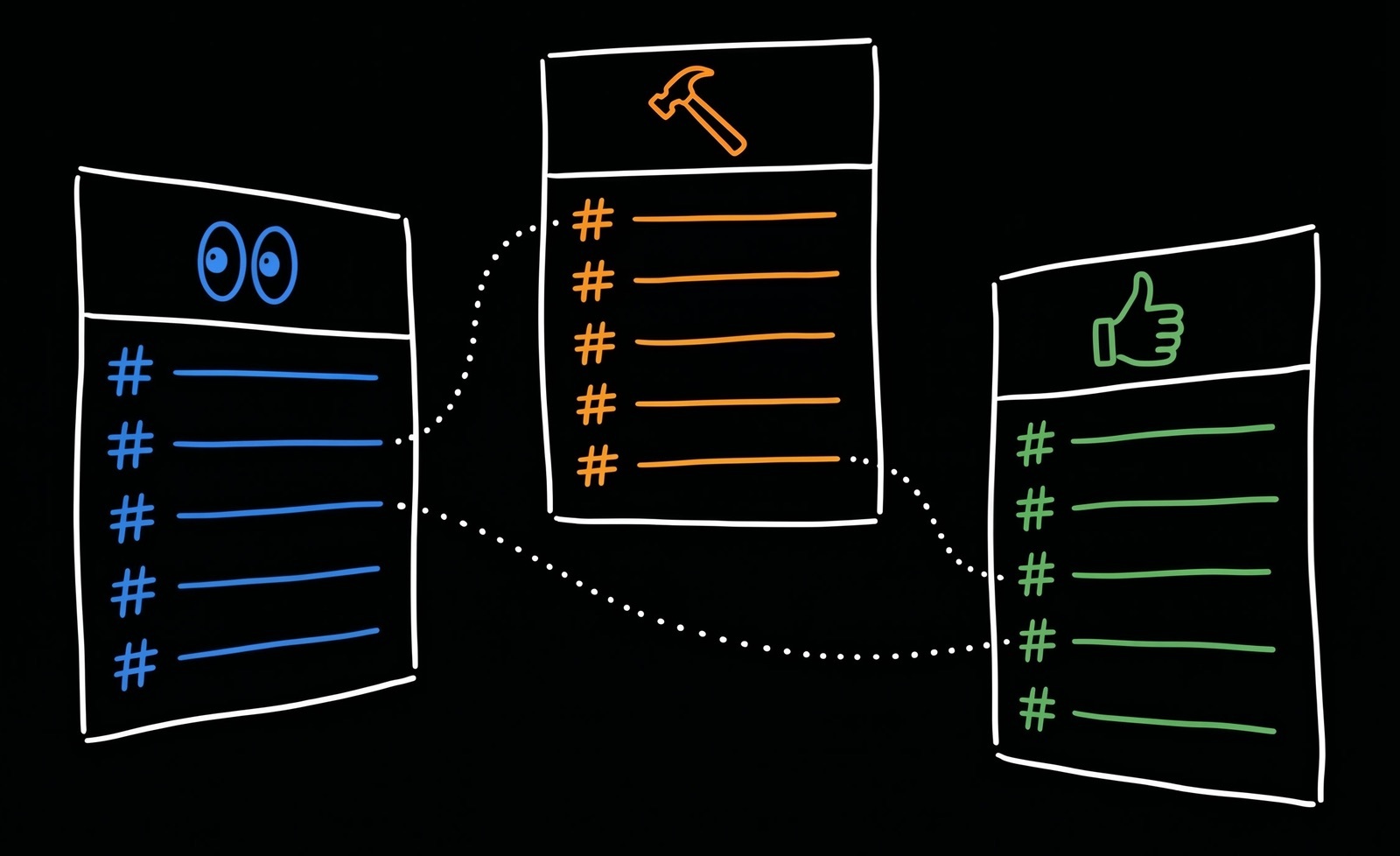
So the more you try to have a single source of truth for all your to-dos, the more attention you have to spend just managing them. But if you leverage some separation of certain items to be handled by specific tools available at a particular space/time, there are default assumptions that can replace some of that work. Of course, if you end up with too many lists, managing them also starts demanding some energy, and we’re back to the same problem again.
But here’s my example: at work, I keep my to-dos in the same chat app where the whole company communicates every day remotely. This is because an item on my list can simply be a tag to the channel where something is being talked about. I can write something else after the tag, but this means I’m not forced to preemptively start adding my own or someone else’s color to it. The implied next action is to go to that channel and figure out what’s up.
Also, that to-do list can be public. Although it’s not kept up-to-date for the benefit of someone else but me, anyone in the company can read and probably understand it. It’s not much different from someone walking by and seeing what I’m doing if we were working in the same office. And for me, it’s better than post-its or a generic to-do app because again:
✅ I can just tag some context in progress.
✅ It lines up with how, at work, we can have a channel for each project.
✅ Context switching is minimised as there isn’t a whole other thing where tasks are managed.
✅ If I go take a walk to clear my head and somebody needs anything, I can still put it on the list through the chat mobile app.
Where’s the calendar, though? For my work, I can get by without a continuous personal schedule, so it’s enough to follow the company-wide calendar we already have in our back office. However, I can see how normally you feel the pull towards some dedicated centralised platform where a calendar has everything. If I had to work in a more standard context with email + calendar, I’d probably appreciate something like hey.com, where emails can be treated as malleable items moving along some workflow of to-dos.
The same point still stands: you may want to try managing your time as close as possible to the context in which you already spend your time. There’s momentum to be lost or gained from having the thing already there where you need it to be done.